
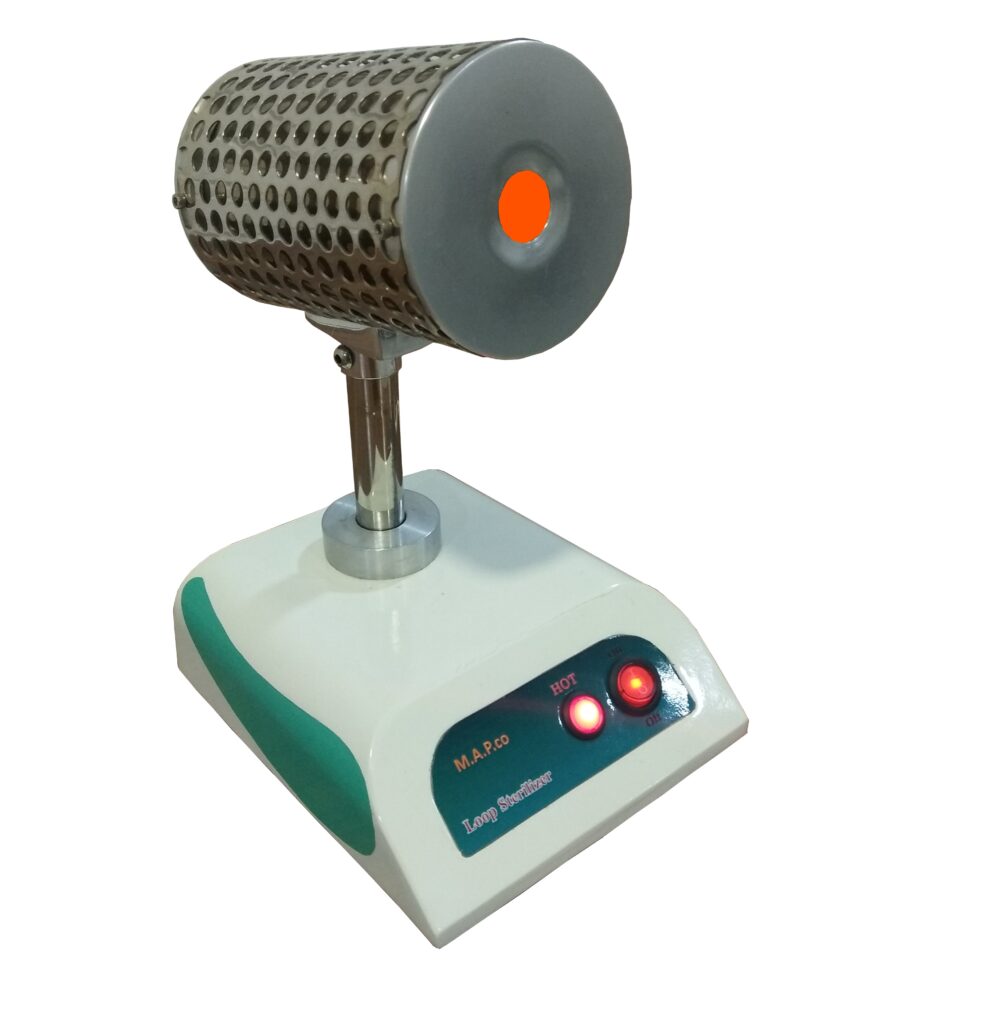
An Electric Loop Sterilizer (also called “loop burner” or “loop-sterilizer”) is a device used to sterilize metal inoculation loops, needles and other small heat-resistant tools — without using open flame or gas. Instead, the instrument uses a high-temperature electric heating element (sometimes infrared / quartz-tube) to quickly sterilize tools in a controlled, safe, and clean way.
It’s ideal for microbiology labs, clinical and research environments – especially where open flame is unsafe or prohibited (e.g. inside a laminar hood, biosafety cabinet, or anaerobic chamber).
Key Features & Benefits
- Flame-free sterilization: No open flame or gas needed; reduces fire risk and removes flame-related hazards.
- Fast sterilization: The heating chamber (quartz/glass tube) heats up to ~ 800–900 °C; sterilization completes in ~ 5-7 seconds.
- Compact & safe design: Small form factor makes it easy to fit under benches or inside cabins; protective metal guard prevents accidental contact with hot parts.
- Low contamination risk: Because there’s no open flame, there’s minimal risk of aerosols, sparks or contamination — ideal for sensitive microbiology work.
- Suitable for glass & metal tools: Works for inoculation loops, needles, small metal instruments, pipette tips, etc.
What it is (technical overview)
A loop sterilizer heats a small quartz/glass tube (sterilization chamber) using an electric heater or infrared lamp. When a metal loop or needle is inserted into the chamber, the extreme heat rapidly kills microorganisms — providing a safe, quick, and reproducible sterilization method.
Typical specs (common for many lab loop sterilizers):
- Chamber temperature: ~ 800–900 °C
- Sterilization time: ~ 5–7 seconds
- Compact size — suitable for small labs, sterile enclosures, anaerobic chambers
- Durable materials: stainless steel housing, quartz/glass sterilization tube
Use-Cases & Why Choose This Device
- Microbiology labs — sterilizing loops/needles before inoculation or sub-culturing
- Clinical & diagnostic labs — where flame burners are prohibited or unsafe
- Anaerobic / biosafety labs — when working in gloveboxes, laminar flow hoods or controlled environments
- High-throughput / frequent sterilization — fast sterilization time reduces downtime between experiments
- Safety-conscious labs — removes risk of open flame, sparks or smoke